
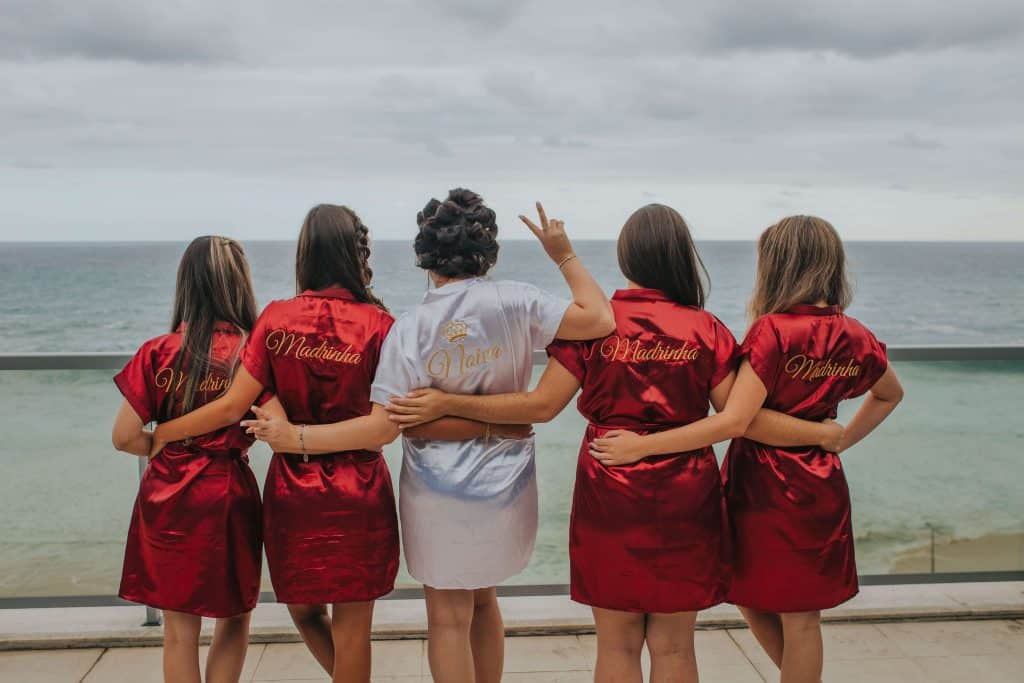
As the maid of honour, you will play a pivotal role in the wedding of your best friend. One of the most significant responsibilities of the maid of honour is making the maid of honour speech. You and your best friend deserve all the praise and attention they can get on this special day. But if you're not a public speaker, the prospect of standing in front of an audience and having to articulate your thoughts and feelings can be daunting.
Your maid-of-honor speech will go off without a hitch if you put in the time and effort to prepare for it. We have compile a comprehensive guide to writing the best possible speech to send off your best friend into her new life with her partner, as we are both avid wedding-goers and strong believers in girl code and BFF love. Keep reading for tried-and-true advice on how to give a maid-of-honor speech that will be remembered for a very long time.
The maid of honour, also known as the bridesmaid or matron of honour, is a highly anticipated role for nearly every female wedding guest. One of the best parts of the wedding day is being invited to participate in one of the most memorable rituals: the walk down the aisle with the bride and groom and other members of the bridal party.
Next to the bride and groom, the maid of honour is the most prominent member of the bridal party. The truth is that she usually gets more compliments at a wedding than the best man does.
Even in the best of circumstances, it can be intimidating to sit down and write an entire speech. Even if you are a prolific writer by nature, you will still find this task challenging.
But most of us could use some guidance in crafting a great speech for the role of maid of honour at a wedding. Let's check out some suggestions for doing so.
Table of Contents
How to Write a Maid of Honor Speech
The inspiration is pouring in. Whether you're using a physical notebook or your phone's note-taking app, you've opened a blank page. It's time to put together a fantastic speech as the maid of honour. Now, what do you think?
You Must Think of Everything
An experienced bridesmaid or maid of honour toastmaster will typically do the following, though you are free to make as many changes and additions as you like to the standard.
- Explain how she knows the happy couple.
- Make it clear that she is overjoyed to be attending the wedding and that she appreciates the happy couple (and their parents, if applicable) for inviting her to share in this special day with them.
- Add something unique (a favourite memory, joke, or sentiment) that will touch everyone's heart.
- Give them words of wisdom (that will hopefully move them) to carry with them into their future together. (Here is where you might find a quote.)
- As a final gesture, have everyone raise a glass and toast, "To [the couple's names]!" (Remember to drink up!)
Be Real
Keep your friendship with your best friend in mind as you begin writing your speech. Best man speeches often include humorous (but tasteful) anecdotes about the best man and maid of honor's friendship with the bride. Tell stories about your friend and his or her new spouse if you've gotten to know them. Express your admiration if their love has moved you. Now is the time to be vulnerable and share funny or meaningful stories from your friendship's history.
Choose a Quotation That Fits
It's important to select a quote carefully if you're going to use one; the one you use should reflect the tone and subject matter of your writing. Choose wise or humorous words that you can deliver with conviction, empathy, and clarity of thought. It is not necessary to quote anything. If it sounds or feels fake to you, leave it out and use something that is more genuine.
Style Up
The best man's speech is typically a humorous and self-deprecating recounting of anecdotes and anecdotes about the couple's relationship. In contrast, your maid-of-honor speech need not be overly mushy or flowery to be touching and memorable. Make the most of your hilarity if you possess it. You need not worry about upstaging anyone or appearing unsincere. However, if you aren't a natural jokester, don't try to force levity; just be genuine and share what's on your mind.
Let's Keep It Brief and Satisfying
Keep things basic when making your toast. Don't throw around vocabulary you wouldn't use in everyday conversation. Keep your speech focused; toasts can be two minutes or two lines long. If you're not confident in your ability to deliver a great speech, don't bother with X-rated anecdotes, silly laughter, or sing-songy, gimmicky group efforts. Do not forget that this is your time to shine. Instead of trying to do too much, making it a class action will make you feel better.
Keep Out Only What You Need to
Don't use your maid of honour or bridesmaid toast to rehash old grudges, air family drama, or brag about the raunchier moments from the bachelorette party. A wedding is a happy occasion. Celebrations like these are also occasions for getting the family together. Keep in mind that your pal's family members could be watching.
Delivering Maid of Honour Speech
You've come a long way by finishing your maid of honour or bridesmaid speech. Phew. But when the big day arrives, you'll have to give your speech in front of the happy couple's family and friends. The fear of public speaking is widespread, but there are ways to overcome it.
Practice
After you've written your speech, read it aloud (a lot) to get comfortable with it. On the day of the wedding, you can ask another member of the wedding party for feedback on your delivery, jokes, and hand gestures if you like. The people who came to see you before the show will be invaluable to you. You don't have to memorise your speech if you write it out or put it on note cards and bring them with you to the podium. If your nerves start to get the best of you, you'll be relieved to have that safety nett.
Maid of Honour Speech Template
Each maid-of-honor speech is unique, so we've provided a general framework to help you get started. Once you've got your words in the right order, delivering them will be a breeze.
First the Bride, Then the Couple.
You, more than anyone else at the wedding, know how much your best friend's new partner has influenced her for the better. Your speech should begin by describing the friend you had long before she met her partner, and then transition to the significance of the relationship between the two of them. Maybe her new partner's sense of humour has helped her become even funnier, or maybe having their support has encouraged her to try new things. It's possible you've never seen your best friend's happiest and most fulfilled self before.
If you don't know the groom very well, you can still include him in the speech by describing how the bride has been improved by being married to him.
Tell a Great Story.
Rather than making a general statement, you can make your point more effectively by telling a story about the couple. Telling a story about your best friend's personality and the ways in which she has been an amazing friend is much more meaningful than simply saying the words. To make sure the examples you choose to share are pertinent to your overall message, it can be useful to think of the speech in terms of one major theme or several minor themes, and then flesh it out with memories that highlight those.
End Optimistically
Once again, the focus of the speech should be on the love and commitment of the groom and bride to one another, rather than on your own feelings towards the bride. Be sure that the entirety of your toast culminates in a positive message of congratulations on the couple's marriage and a reiteration of your joy for their happiness. The easiest way to do this is to create a rough outline of your speech, outlining the main points you want to make, and then filling in the details.
Speech Structure
Some of the best maid of honour speeches have a straightforward format. Thank them right off the bat. Then, give a brief summary of who you are. Get to know the bride and your relationship with her. Explain to people how long you've known them and how well you know them.
Share an anecdote from the time when you were kids and you were best friends. Discuss the evolution you've witnessed in them over time. Next, please tell us how you first met the groom. The audience can learn how important this person was to your loved one by hearing your personal account, and you can even add a few anecdotes about their time together.
Send your best wishes to the happy couple. Feel free to propose a toast if you'd like. First, read through our collection of maid of honour speech examples we've prepared to help you fill in the blanks and get started.
Maid of Honour Speech Tips
If you want to give a great maid of honour speech, keep these pointers in mind.
Keep In Mind That This Is Not About You.
Many of the stories you share should centre on your relationship with the bride, but you shouldn't make the speech about yourself. Do not bring up your own presence again after you have introduced yourself briefly (remember that most of the people won't know who you are or your relation to the couple). You are merely the means by which the newlyweds can extol their virtues. Focus on the other 60 minutes and only insert yourself if absolutely necessary.
Put an End to Any Talk of Past Relationships.
To hear about past dating missteps, especially in front of one's loved ones and prospective life partner, is something no one wants to experience. So, avoid the temptation and talk about your ex at your next girls' night. Make sure your words are always uplifting and encouraging, and people will think well of you. You don't want to be misunderstood as a Grinch trying to ruin the wedding for the happy couple.
Keep It Brief.
If your speech is too long, your audience may start to zone out and miss some of your best jokes. A toast should last between three and five minutes, giving you time to introduce yourself, discuss the topic at hand, provide examples to back up your claims, and then ask the audience to join you in raising a glass to the happy couple.
Take a Breather After Telling a Joke.
After telling a joke, pause for a moment to hear the audience's reaction. Not giving your audience time to laugh at your joke or process your next statement is a surefire way to lose their attention. Remember that while a humorous opening may hold the audience's interest for a minute or two, it is the speech's substantive content that will keep them engaged until the very end.
Don't include a joke or anecdote in your wedding speech that requires the audience to be present to understand. A situation or joke is unlikely to land with an audience if they are unaware of the background details. Make light of the bride, perhaps by making fun of her taste in movies or music from her youth, but don't let it get too rough. Avoid saying anything that could embarrass her or make her feel uneasy.
Practice Your Maid-Of-Honor Speech.
It will sound better when you read it aloud for real if you practise your speech numerous times before the big day. If you want to hear how your pace and tone come across, record yourself giving the speech twice a day. With the words practically memorised, you can speak with assurance. You should practise your speech in front of friends to see if your jokes land.
Ways to Improve Your Presentation Skills
Consider the following suggestions if you're nervous about giving a toast in public:
- Do not write out your entire speech word for word, but rather in phrases. When you have chunks of text rather than individual sentences to read, your speech becomes more fluid.
- Avoid lengthy explanations. Nobody enjoys being subjected to a never-ending stream of inane babbling. It takes less than a minute (plus or minus a few seconds) to prepare the ideal toast. Any further and people will start thinking, "She likes to hear herself talk."
- If you want to make sure your toast flows smoothly, you should read it aloud to yourself and a friend.
- Slow down your normal speaking pace a bit. Most blunders and stammers occur because the speaker speaks too quickly when nervous.
- Breathe! When practising your toast, underline the spots where you should pause for a breath so that you don't sound like you're struggling to get your words out at the end of a long sentence.
- Relax your knees. Keep your knees loose and your body relaxed to appear tall while giving a toast.
- Try to avoid drinking. Your toast will go off on a slurred tangent if you drink too much, and the bride will never forgive you if you bomb during her big moment in her honour.
- Engage in direct gaze. Instead of looking at your notes or wandering around the room while you speak about the bride and groom, make eye contact with them. If you feel uncomfortable making direct eye contact, look over the heads of the guests and make broad, unintentional eye contact with each person in the room.
- If you're feeling anxious, just force yourself to smile. Make sure your facial expressions reflect the same level of humour as the content of your toast, especially if you're relating a funny story. Don't give your toast with the air of someone who is just trying to get through it.
- Tears are acceptable; if you feel the need to cry, do so freely. This is a simple expression of your love and joy for the bride. You shouldn't feel like you have to defend yourself.
FAQs About Wedding Speech
- Introduce yourself – Tell people who you are and your relationship with the bride.
- Start with the bride – Talk about why she's a good person and friend.
- Share the love story – Share your version of how they met.
- Compliment the groom – Say some nice things about the groom.
A maid of honor speech typically only needs to be a few minutes long. Aim for 2-3 minutes, and it shouldn't be longer than five minutes maximum.
Tell guests who you are, mention you're the Maid of Honor and highlight your relationship with the bride. That way, the speech gives context and helps the guests to connect with what you're about to say. Remember that it isn't about you.
The Maid of Honor refers to a bride's honour attendant who is NOT married. The Matron of Honor refers to one who is married. Honour attendants are usually best friends or sisters. Recently though, some brides have selected their mother for this role.
During the ceremony, the maid of honour's responsibilities include holding your bouquet while you and your spouse exchange a vow and holding the groom's ring.
Conclusion
When your best friend gets married, you'll be a major player as her maid of honour. The maid of honour traditionally takes centre stage in wedding celebrations. To sit down and compose an entire speech for such a prominent role can be daunting. Emphasize how thrilled she is to be there for the wedding. Bring the group together with a personal touch.
In his speech, the best man will likely tell humorous stories about his and the maid of honor's friendship. Don't bother giving a speech if you're not sure you can give a good one. Your maid of honour or bridesmaid toast is not the time or place to air dirty laundry. You'll find that speaking becomes much easier once you've organised your thoughts. You can see the positive changes in your best friend thanks to her new partner.
Before talking about her current boyfriend or girlfriend, you should talk about the friend she was before she met her current one. Instead of talking about how you feel about the bride, the speech should centre on the groom and bride's love and commitment to one another. Keep these suggestions in mind if you want to deliver an outstanding maid of honour speech. You are nothing more than a sounding board for the happy couple to brag about themselves. The ideal length for a toast is three to five minutes, giving you plenty of time to introduce yourself and others.
Leave out any jokes or anecdotes that would be lost on a virtual reader. Make fun of the bride, maybe by making fun of her choice in teen flicks or music. Be careful not to say anything that might make her feel awkward. Practice reading it out loud to yourself and a friend to eliminate stuttering and slow down your reading speed. It's important to greet everyone you meet with a smile and make eye contact.
Content Summary
- As the maid of honour, you will play a pivotal role in the wedding of your best friend.
- One of the most significant responsibilities of the maid of honour is making the maid of honour speech.
- Your maid-of-honor speech will go off without a hitch if you put in the time and effort to prepare for it.
- Keep reading for tried-and-true advice on how to give a maid-of-honor speech that will be remembered for a very long time.
- But most of us could use some guidance in crafting a great speech for the role of maid of honour at a wedding.
- It's time to put together a fantastic speech as the maid of honour.
- Explain how she knows the happy couple.
- Keep your friendship with your best friend in mind as you begin writing your speech.
- Best man speeches often include humorous (but tasteful) anecdotes about the best man and maid of honour's friendship with the bride.
- The best man's speech is typically a humorous and self-deprecating recounting of anecdotes and anecdotes about the couple's relationship.
- Keep things basic when making your toast.
- Keep your speech focused; toasts can be two minutes or two lines long.
- Do not forget that this is your time to shine.
- You've come a long way by finishing your maid of honour or bridesmaid speech.
- But when the big day arrives, you'll have to give your speech in front of the happy couple's family and friends.
- After you've written your speech, read it aloud to get comfortable with it.
- Each maid-of-honour speech is unique, so we've provided a general framework to help you get started.
- Once you've got your words in the right order, delivering them will be a breeze.
- You, more than anyone else at the wedding, know how much your best friend's new partner has influenced her for the better.
- Rather than making a general statement, you can make your point more effectively by telling a story about the couple.
- The focus of the speech should be on the love and commitment of the groom and bride to one another, rather than on your own feelings towards the bride.
- Be sure that the entirety of your toast culminates in a positive message of congratulations on the couple's marriage and a reiteration of your joy for their happiness.
- The easiest way to do this is to create a rough outline of your speech, outlining the main points you want to make, and then filling in the details.
- Some of the best maid of honour speeches have a straightforward format.
- Get to know the bride and your relationship with her.
- Feel free to propose a toast if you'd like.
- If you want to give a great maid of honour speech, keep these pointers in mind.
- Many of the stories you share should centre on your relationship with the bride, but you shouldn't make the speech about yourself.
- After telling a joke, pause for a moment to hear the audience's reaction.
- Not giving your audience time to laugh at your joke or process your next statement is a surefire way to lose their attention.
- Don't include a joke or anecdote in your wedding speech that requires the audience to be present to understand.
- You should practise your speech in front of friends to see if your jokes land.
- Slow down your normal speaking pace a bit.
- Keep your knees loose and your body relaxed to appear tall while giving a toast.
- Try to avoid drinking.
- Engage in direct gaze.
- Instead of looking at your notes or wandering around the room while you speak about the bride and groom, make eye contact with them.
- If you feel uncomfortable making direct eye contact, look over the heads of the guests and make broad, unintentional eye contact with each person in the room.
- Make sure your facial expressions reflect the same level of humour as the content of your toast, especially if you're relating a funny story.
- Don't give your toast with the air of someone who is just trying to get through it.
- This is a simple expression of your love and joy for the bride.
