
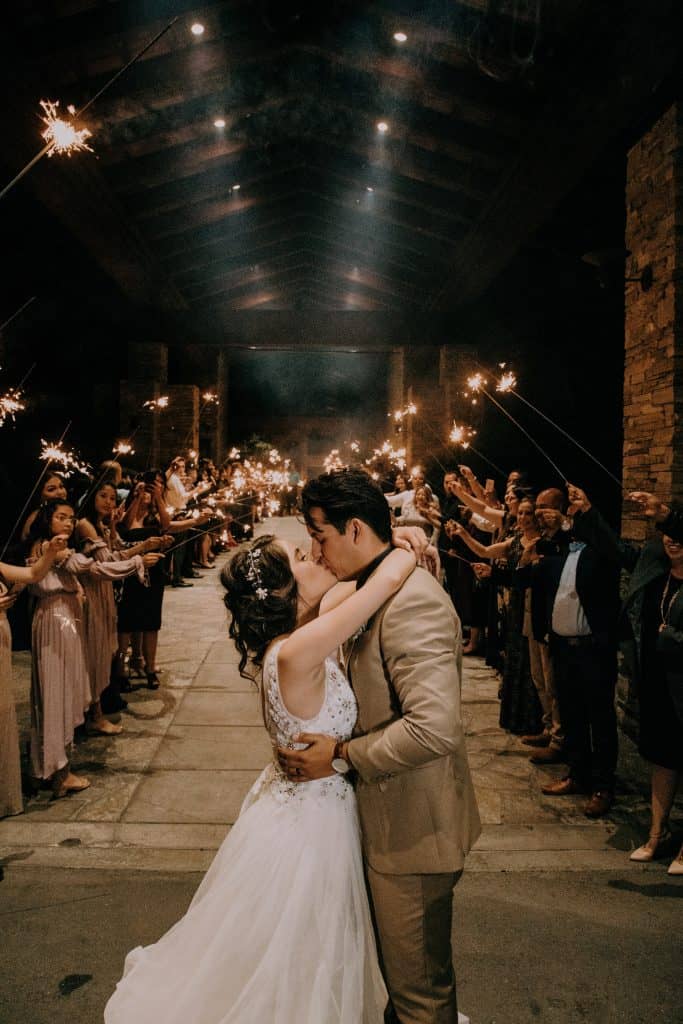
When planning their wedding, many engaged couples fantasise of creative ways to incorporate sparklers. In contrast, most weddings take place inside. Given the widespread misconception that sparklers may only be used in the open air, many engaged couples quickly abandon the notion. However, if you're having your wedding indoors, sparklers can be a beautiful and safe touch to the festivities. You can have a good time with wedding sparklers indoors without worrying about injury or damage if you follow the safety precautions. Everything you need to know is listed here.
Every engaged couple has at least one tradition they hope to uphold on their wedding day: making a spectacular entrance as their guests begin to arrive. However, don't lose sight of the exit.
Looking for the ultimate Wedding Reception Venue in Melbourne? Look no further, Vines of the Yarra Valley is here.
Table of Contents
What Are Sparklers?
Sparklers are typically 8", 10", 14", 20", or 30" in length and are formed from a length of mild steel wire. The centre of the wire is submerged multiple times in a pyrotechnic slurry, which, once dry, covers around two-thirds of the wire's total length. Sparklers of high quality and craftsmanship will have an even, crack-free coat of their composition. Rust on the wire or in the mixture is a clue that the sparklers have been exposed to damp circumstances. Rusty sparklers will burn poorly, if at all, and should be avoided.
Gold sparklers are the most common, and often the only option for bigger volumes. In contrast, you can get sparklers that burn red, green, or blue and weigh no more than 5 grammes of material. These fireworks are often hardly more than 10 inches in length.
Unlike their gold counterparts, red, green, and blue sparklers do not produce the characteristic branching halo of sparks when they burn. As an alternative, they feature a smaller, more central ball of flame in the right hue, surrounded by a coarser, less dense display of silvery-gold sparks. The hues, especially the blues, are typically somewhat muted.
Sparklers, which shoot off silver sparks, are a popular item for brides and grooms to check on when planning a wedding. Due to federal rules prohibiting certain chemicals from being used in sparklers, production of these has ceased.
The use of sparklers during a wedding is a terrific way to add a unique and memorable touch to your photographs.
Envision your loved ones waiting in line with lit sparklers in their hands. On your way to the automobile as a married couple, everyone cheers and claps.
This enchanted ritual has recently become a standard feature at outdoor weddings held in the summer. However, there are blunders you should try to avoid.
Do Not Let Children Use Sparklers Alone
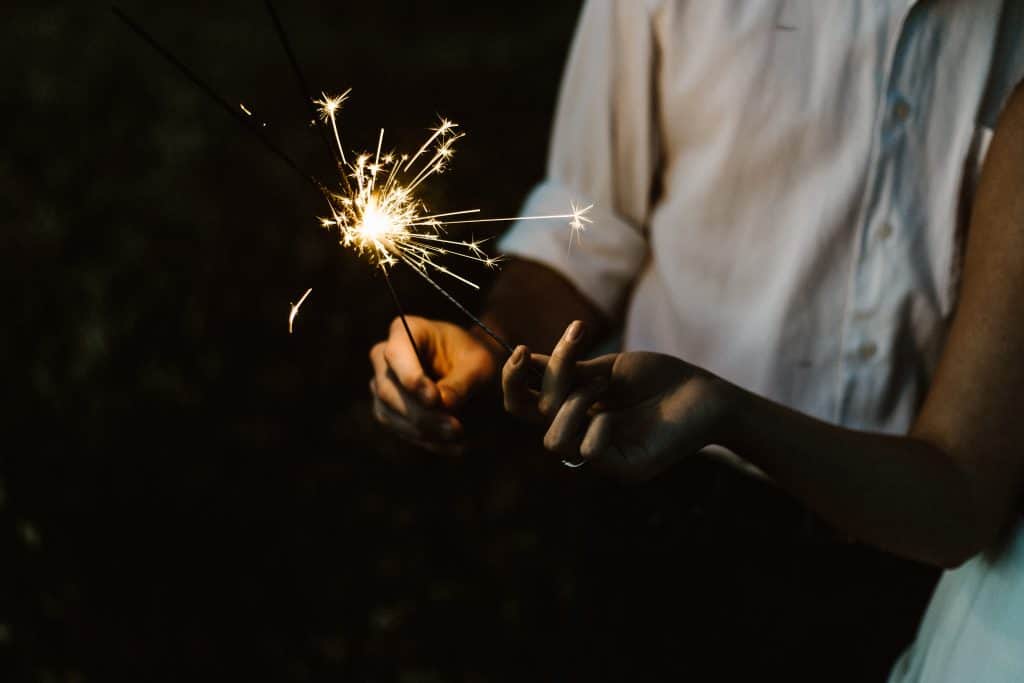
When lit, the sparkler at your wedding—or any other kind of sparkler—may reach temperatures between 1800 and 3000 degrees Fahrenheit. Sparklers are fun, but they can cause serious burns if handled improperly. Under no circumstances should anyone under the age of 16 use a sparkler without adult supervision. This point cannot be emphasised enough: pyrotechnics and sparklers pose a serious threat to children. Sparklers at a wedding can be a lot of fun for kids, but it's important that they be supervised by an adult while they use them. The correct method to hold a sparkler once it has been lighted is with an outstretched arm, pointed away from the body. Teaching kids that sparklers aren't playthings is crucial. Most kids don't have any idea how hot or deadly the sun may be. It's important for them to be wary of lighting a sparkler too close to anyone else. You shouldn't worry about them as long as there's an adult there to keep an eye on them. Remember to remind everyone that sparklers should be held steady in the air rather being waved recklessly. Children should under no circumstances be allowed to throw a sparkler.
Keep Away From Clothes and Alcohol
This should go without saying when using sparklers at a wedding, but we checked just in case. All guests should make sure that the bride's dress and any other long materials on the dance floor are kept well away from any fireworks. For over 15 years, we have sold sparklers for weddings and other special events, and we have never once heard of any clothing being damaged. High-quality wedding sparklers will still produce sparks sometimes, but this is not cause for concern. Please place all drinks ordered at the bar or at the table. Sparklers are fun, but they can be dangerous if used while carrying flammable items like drinks. It's possible that your feet will be safer from sparks and flames if you're wearing shoes with closed toes.
Read our prior piece for further information on where to look for a wedding preacher.
Only Use True Wedding Sparklers
It's not uncommon for brides and guests to substitute cheap 4th of July sparklers for more expensive, high-quality wedding sparklers, but the difference is like night and day. Regular sparklers can produce smoke and potentially deadly sparks, which can ruin a special occasion. The smoke and heavy sulphur odour from traditional sparklers is really overpowering. You definitely don't want a mediocre exit documented by terrible photos during your Grand Wedding Exit. When we say "real wedding sparklers," what exactly do we mean? Sparklers with a steel-wire core will burn evenly and produce no ash or smoke; these are the types to look for when shopping online. In order to guarantee the best sparkle and even burn time for each sparkler, Grand Wedding Exit uses a double dipping procedure. Sparklers of both 20 and 36 inches in length are manufactured to these standards. At Grand Wedding Exit, we set the bar high and are confident that our superior product and service set us apart from the competition.
Sparklers Are Still Hot Even After They Go Out
It may come as a surprise, but the majority of sparkler-related injuries occur after the fireworks have burned out. To prevent injury, always dispose of old sparklers in a bucket containing sand or water since the wire inside remains hot long after the sparks have stopped. Trash bags should not be used because they will melt instantly. Popular with newlyweds, our wedding sparkler buckets make it simple for your guests to collect, transport, and distribute sparklers before the reception even begins. Please contact our main offices through email or telephone if you have any inquiries about sparkler safety or any other questions.
Forgetting to ask Permission From Your Wedding Venue!
Sparklers may not be allowed due to insurance policies in effect at a given venue. It is crucial that you contact the venue and the photographer in plenty of time to submit all appropriate papers in the case of National Trust properties, when a risk assessment may be required. It's best to plan beforehand if you want to shoot a sparkler group shot during your wedding for the sake of everyone's safety.
Buying the Wrong Sparklers
The majority of "Wedding Sparklers" on the market are merely a few inches in length, but you should look for longer ones that ignite gently and steadily on your special day. The lower flame temperature and greater amount of time to work with allow the photographer more opportunities to capture the perfect portrait of the bride in her stunning gown.
Look for sparklers with a minimum burn time of one minute.
They're perfect in every aspect; you can light one end and watch it burn for more than a minute; and they're 18 inches long. (But gloves are recommended to protect the fingertips.)
Lacking in originality a tiny bit? We have compiled a list of wedding decorators in Melbourne for your convenience.
Forgetting to Speak to Your Photographer in Advance
That is, this is not the type of shot you want to take by calling the photographer at the last minute. The most polished results, in my opinion, can be achieved by using an off-camera light. This happens when visitors use stands or their own hands to hold flashguns in place of the camera's built-in flash. The use of radio triggers is essential for this to work for any photographer. If your photographer doesn't already have radio triggers, make sure to let them know early on so that they can acquire them in time for your wedding sparkler photo.
Using Matches
Sparklers can be deadly and are notoriously difficult to light with a match. They don't become very hot, aren't reliable, and burn out quickly. Each time we take a group photo, I make sure to be in charge of lighting the sparklers. Guests should light their sparklers at the same time, but not at the exact same instant, and keep as much distance as possible between the sparks and their clothing (particularly the bride's dress!).
Not Planning Your Sparkler Photo Around Sunset
Once you've decided on the aesthetic you want for your wedding sparkler shot, the best time to take it is. The golden hour is best for sparkler photos, in my opinion, rather than the wee hours of the night. There are two main explanations for that!
To start, I love the sight of a clear blue sky and a touch of natural light on people's faces.
Two, it's safer to take the picture earlier in the evening when everyone is (presumably) more level-headed. It's probably best to fake it and have a professional retoucher work Photoshop magic if your guests have been doing Jaeger bombs at midday.
Don't forget to inform guests of the agreed upon time!
Check that the venue will Allow Wedding Sparklers
People often forget the most basic step when organising a sparkler send-off: making sure the location permits it. Insurance restrictions prevent it from being done in some places.
Next, find out if the venue permits only the 20-inch ones or also the larger 36-inch ones. You wouldn't want to turn up with a big sparkler if they only allow little ones.
The success of your wedding reception hinges in large part on the quality of your wedding sparklers.
Have an Announcement Sign
It's important to have a sign that proclaims your spectacular farewell. Guests will appreciate your thoughtfulness if you inform them of the exact time of the event. Images with many people waving you off are ideal.
Guests usually start to leave as the evening progresses, but if they hear that you'll be using wedding sparklers, more people will remain around to participate in the celebration.
You may easily manufacture these on your own, or get them for sale online.
An Easy Way to Light Them
Too often, newlyweds get custom matchbooks to distribute alongside their sparklers, which is a huge error. Your visitors will love them as keepsakes, but they won't be useful for lighting the sparklers.
It's important to make it simple for everyone to light their sparklers at the same moment. A grill or butane lighters is ideal for this purpose. One at each end of the wires will assist everyone get the best possible lighting.
When done in this manner, all of your sparklers may be polished to perfection in a relatively short amount of time.
A Way to Dispose of the Sparklers
After they've helped you say your goodbyes with sparklers, your guests will need a secure place to keep them. Putting them down in any circumstance can be dangerous because to their high burning temperatures.
Put sand in a couple of buckets until they are about half full to contain the heat without damaging anything. If you're going to use buckets to hold wedding sparklers, we suggest filling them with sand instead of water.
You should also designate someone in the wedding party to keep an eye on where guests are setting up their sparklers. And if they're anxious about cleaning up later, tell them that buckets make light work of it.
Not Enough Room
If you want to have sparklers during your wedding, you'll need to select a good spot for them. Space for two lines and the pair to walk in between is required.
Sparklers are potentially harmful, so avoid getting squashed. It's preferable if you can safely stop along the road to take pictures without fear of being struck by lightning.
Your sparkler send-distance off's from the car is another factor to consider. It's preferable if it's not too far away so you can get going quickly.
Overbuying
Sparklers are a popular addition to weddings, but many couples end up with too many after purchasing them in bulk.
Typically, a wedding would have between 100 and 125 guests, but you do not need to provide a gift for each and every one of them. It doesn't matter if you put up a sign saying "wedding sparklers available," some people will still choose to leave. Not everyone will take part because some will be snapping pictures and others may be too scared to join in.
That's why it's suggested that you get enough for roughly 75% of your visitors. Have no fear, though; many businesses will accept returns of unneeded fireworks for weddings.
Wrong Timing
Timing is everything when trying to capture that perfect moment in a photograph. It's a common blunder that many individuals make. Some sparklers light better than others, and some maintain their glow for longer than others. We usually recommend trying a few different ones to see how long it takes to light them and how long they last once lighted.
The Fourth of July sparklers that are shorter and not as well made as those used for weddings burn out far more quickly and pose a greater safety risk.
A countdown will alert your guests to begin lighting candles and will give your photographer ample time to capture your exit.
Limiting Yourself
In addition to the customary sparkler exit, wedding sparklers may serve other purposes as well. They work wonderfully for highlighting other significant moments in your life, such your first kiss or your wedding day. Just hand them out as guests take their seats, and have someone walk them through lighting them properly.
You might have your bridesmaid write something special like "love" or "forever," and then have your photographer film the moment. It's possible that this will happen while you're kissing or when you're taking images of the kiss afterwards.
We offer a few additional suggestions if you want your wedding fireworks to be spectacular. Minimizing the amount of ambient light is important for achieving correct exposure. Let the photographer know what you have in mind, as they may want to do some practise shots before the big day.
Conclusion
Sparklers are normally 8 inches, 10 inches, 14 inches, 20 inches, or 30 inches long, and are made from a single strand of steel wire. The standard, and typically only available for larger quantities, is gold sparklers. Sparklers that have rusted should not be used since they will not burn properly, if at all. Sparklers are exciting to use, but they pose a major risk of burns if not handled properly. Young children at a wedding may enjoy sparklers, but only if they are well monitored by an adult.
In no circumstances should a child under the age of 16 use a sparkler unattended. In contrast to traditional sparklers, those made with a steel-wire core will burn cleanly and without creating any ash or smoke. According to these norms, manufacturers can create sparklers of both 20 and 36 inches in length. The wire inside a sparkler remains hot long after the sparks have stopped, so it's important to dispose of used ones in a bucket of sand or water to avoid damage. Sparklers used in weddings are at least 18 inches in length and have a minimum burn period of one minute.
They are flawless in every way; you can ignite one end and watch the other end burn for almost a minute. Sparkler photographs are best taken at the golden hour rather than in the small hours of the night. The sparkler send-off during your wedding is crucial to its overall success. Assuming the event's setting allows it, be careful to let visitors know when they should pack up and leave. Sparklers are best lit in a group using a grill or butane lighters.
Wedding sparklers are a common addition, but after buying in quantity, many newlyweds have a surplus. Someone in the bridal party should be responsible for monitoring where guests are placing their sparklers. The fireworks for a wedding are often rented, and many stores will take them back. Your guests will know when to start lighting candles thanks to the countdown, and your photographer will have plenty of time to capture the moment before you leave. Not all sparklers are created equal; some ignite more easily than others and some keep shining for longer. Correct exposure requires minimising the amount of available light.
Content Summary
- On the other hand, sparklers add a lovely and risk-free element to an indoor wedding.
- If you're careful, you can use wedding sparklers inside without risking harm to yourself or your property.
- Just picture them waiting in line with lit sparklers in their hands.
- They need to use caution and not fire a sparkler too close to other people.
- Please only use authentic sparklers for your wedding.
- Although the price and quality difference between wedding sparklers and 4th of July sparklers is substantial, many brides and guests still opt for the cheaper option.
- Grand Wedding Exit employs a double-dipping process to ensure that each sparkler burns evenly and brilliantly.
- Ideally, you want sparklers that will burn for at least a minute.
- Make sure your guests know when to show up!
- Make that the reception hall permits the use of wedding sparklers.
- Making sure the venue allows it is often overlooked when planning a sparkler send-off.
- Your wedding sparklers will make or break the success of your celebration.
- Knowing the exact time of the event will be greatly appreciated by your guests.
- It's vital that everyone be able to light their sparklers at the same time, so we should make that as easy as possible.
- In addition, you need to assign someone to keep an eye on where attendees are placing their sparklers.
- Lack of Space
- There needs to be a decent location for the sparklers if you want to use them during your wedding.
- Guests can start lighting candles in time for your leave and photos can be taken without any interruptions if you use a countdown.
- Constraining Your Potential
- Sparklers during a wedding can be used for more than just the traditional sparkler exit.
- Correct exposure requires minimising the amount of available light.
Frequently Asked Questions About Wedding Sparklers
18″ or 20″ work great for an average-sized wedding. They burn for a minute and a half and give plenty of time for wedding sparkler photos. The 36″ sparklers burn for about 3 minutes and are great for larger weddings.
While a small, intimate wedding would allow you to use sparklers 10 inches in length, a larger venue of over 100 guests in attendance would require 36-inch sparklers. Offering three full minutes of burn time, you should have plenty of time to capture that picture-perfect moment.
Also known as the “grand exit” or “farewell line”, they're replacing items such as birdseed, rice, bubbles, and confetti in this timeless wedding tradition. The bride and groom are sent off in style as the sparklers light the path for their exit.
Normally, we would recommend ordering the sparklers you want a few months in advance. This will make sure that everything is in stock and you can make sure you get the ones you want for your big day.
