

Besides celebrating your marriage, the food at your reception will be the highlight for your guests. If you want your guests to have a good time and remember your wedding reception, it is crucial that you hire a good caterer. These suggestions help you find the best caterer for your event.
Table of Contents
Tips for Choosing a Wedding Caterer
The importance of the reception that follows the ceremony cannot be overstated. This is the time of day when people are most eager to interact with others as they gather for meals, drinks, and physical activity. It's for this reason that picking a reliable caterer for your wedding is crucial. Your guests will remember the quality of the food and the level of service they received long after they leave. In the catering business, both quality and price are crucial.
A professional wedding caterer can make your reception a memorable and enjoyable event for all of your guests. Furthermore, you wish to maximise your investment. Your wedding reception will be a smashing success if you and your caterer share a deep rapport. Keep in mind that you're the one in charge and the one doing the hiring.
When planning a wedding, it might be difficult to choose a caterer because of the many factors to consider, such as the cost, the number of expected guests, and the menu. The good news is that if you hire a reliable wedding caterer, they will be able to assist you in determining all of these details.
Tips for Hiring a Wedding Caterer
You'll find our advice on finding the best caterer for your wedding below.
Compare Prices
Everyone who offers wedding catering services will tell you they provide the best food. Regardless of the wedding caterer's reputation or how beautiful their website is, you should always interview at least three candidates and try a sampling of their food before making a final decision. Make sure you look at the finer points.
The internet is, of course, the first place you should look when doing research. Check out a list of the top wedding caterers in your area. Then, select specific criteria such as "wedding catering" to narrow down your search results.
Going down the list, carefully examine each caterer by learning as much as possible about its background, the events it has catered in the past, and the wedding photos it has provided. Read the profiles of different caterers to learn about the menus and services they provide.
Book Early

If the wedding location you're considering doesn't offer catering or a list of approved vendors, you should begin your search by narrowing down a list of caterers you enjoy. As soon as you've narrowed your choices down to a manageable number, it's time to get in touch with potential partners to schedule meetings.
You can begin your search for a wedding caterer by perusing Instagram for food inspiration or contacting a restaurant you frequently to see if they have a special events department. If no one in your immediate circle has any ideas, consider asking the wedding's photographer or DJ.
Consider the logistics.
Most couples will pick a location for their reception before worrying about food. Consider the end goal, work backwards, and take into account practical considerations. Concurrently planning the event's location and food service can help avoid last-minute concessions.
Establish your budget.
You should set a reasonable budget from the outset as you consider catering possibilities. Knowing what kind of cuisine you want and how much money you have to spend is crucial. Caterers put in extra effort to ensure that each client's food is perfectly tailored to their preferences. Since they want their service to be as unique as their customers, they don't offer standard menu options. Without knowing how much money they have to work with, they can't decide whether to make a menu with sandwiches or lobster.
Don't even think about scheduling interviews with caterers before you have a firm grasp on both your spending plan and your anticipated guest count. Candidates will be able to provide you with a range of per-plate costs that fall inside your budget as a result. You also need to know what kind of food you want served at your wedding. Meal costs vary depending on whether guests dine seated or at a buffet.
If you aren't sure which to choose, the caterer should be able to offer suggestions. Tell them about your ideal wedding day and ask for advice. Your wedding caterer should have the expertise to take your ideas and make them a reality.
Communication Matters
When you have narrowed down your list of possible suppliers, the next move is to contact each one individually to request a quote. Various components are required, each serving a unique purpose. This will help you compare prices for your unique wedding and get ready for the next phase, where you can hopefully get a better deal. Only the wedding caterers whose prices fall within your budget will respond with additional information.
Keep the quotes you receive from local caterers and use them as leverage during your in-person meetings with some of them to negotiate a lower price. Maintain a log of how each catering company responds to your inquiries. How quickly they reply to your messages is indicative of how valuable you are to them.
The client always comes first for a good wedding caterer. It's crucial that this person hears and considers your suggestion. Then, he or she should have a solid grasp of the nuptials you have in mind based on your responses to those questions. You shouldn't hire a caterer who spends more time trying to convince you to use his or her ideas for the reception than delivering what you asked for.
Attend Appointments Prepared
After settling on a spending limit and shortlisting prospective caterers, schedule interviews and see if you can arrange for food samples at the same time. It helps to have a concept of the tone you want to set for the meeting before you start talking to each other. Just show them the end goal, and they'll see if they can get there to meet you.
Before Signing a Contract, Check the Food’s Quality
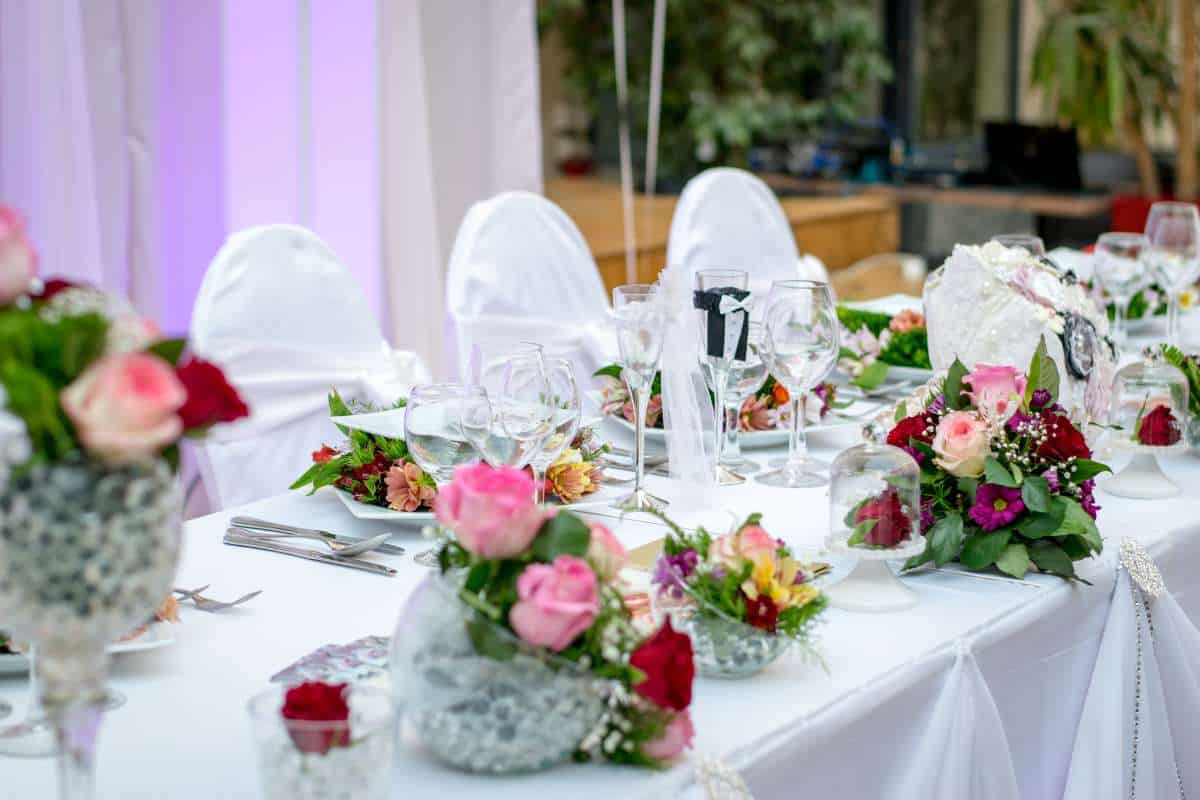
Keep in mind that not all wedding caterers provide tastings prior to signing a contract. However, it's tough to imagine committing to anything without first giving it a shot. The use of only visuals is insufficient.
If you have strong feelings about the catering service and/or menu you would prefer, the game may not be over yet. Wedding caterers may hold regular dinners or exhibit at bridal expos to promote their services. Try to attend at least a couple of the events that the caterer is holding. It's going to be a show that's worth every penny you spend to see.
Even if the business doesn't host events, if you're into with the list of food you should sign a contract with them anyway. Just make sure there's a way out if you change your mind about the food. You may want to look elsewhere for a wedding caterer if this one continues to reject your demands.
Provisions for termination should also be carefully considered. It has nothing to do with your relationship status if life throws you a curveball and forces you to push back the first date. Nonetheless, it's likely that you'll forfeit your initial payment in this scenario.
Cost-Per-Person
References
One must always verify references. In many cases, the bride will request reference contact information but then never follow through. Feel more at ease with your hiring decision by calling at least two references. Don't be bashful; this is your second chance to share details about the big day!
Request three references from each of the remaining two candidates before making a final decision. When speaking with the caterer's references, make sure to enquire as to what they would have liked to see changed or enhanced about the wedding.
And if you can, try to track down a reference from a wedding the caterer catered where issues arose. Inquire with the service provider and the client's reference as to how the issue was resolved.
Picking a caterer who provides excellent service is crucial. Make careful to find out how many servers are assigned to each table. All depends on the reception you're getting. One server for eight to ten guests is a good rule of thumb.
Feed your vendors
Once you have an accurate headcount, be sure to include the DJ/band, photographer, and wedding planner in your catering budget. Naturally, you need to check with your vendors to be sure they want to eat before you count them in your headcount. Keep their numbers distinct from your guest count; caterers often offer discounts for "vendor" meals. Verify with your caterer that the suppliers will be eating in a separate location from the attendees.
Request a leftover basket!
Your caterer should be able to provide a small taste of everything that will be served during your event. If you plan to socialise, dance, and celebrate with your guests at your reception, you may find that you don't have time to sit down and savour the delicious spread. A leftover basket is perfect for a midnight snack, even if you're flying out the next morning to begin your honeymoon.
Depending on the caterer, decorations may be included in the quoted fee. Ask for examples of their previous exhibits at trade shows. Floral arrangements and other centrepiece decorations are an option offered by certain caterers who set up buffets or food stations. Make sure all the flowers and decorations provided by your caterer match your vision by discussing your colour scheme as your wedding plans progress.
A menu board is becoming more common at food stations and buffets. Inquire with your caterer about using a framed menu board to classily list the entrée options and their descriptions. Make the menu board part of the theme, adding some entertainment for your diners.
Please don't overdo it on the number of hors d'oeuvre options.
Can you really use eight unique flavours? Providing guests with too many alternatives might be stressful. However, some caterers really recommend this! In that case, just let them know that you don't want to spend any extra cash on anything. In most cases, four kinds of hors d'oeuvres will suffice.
The Art of the Deal
Strive to bargain like a boss. After gathering all the necessary data, choose between your top two options. Why? Why? Because you're the boss, and if you don't like the agreement, you should be free to walk away happy. Having a fallback plan in place will give you greater leverage during negotiations.
Keep in mind that there is no fixed cost. Get the wedding caterer's attention with a lowball offer, and prepare to have it raised before you reach a fair agreement. Never, ever pay the caterer's first proposed price. As long as you are reasonable, they will be willing to work with you if you want your business. You should be very selective when choosing a caterer because of the significant impact they can have on your fairytale wedding. Putting in an effort is something you will be happy you did.
FAQs About Wedding Caterer
Keeps guests well fed: A good caterer knows how to keep your guests well fed. Based on your requirement, they'll plan the meals for the Engagement, Pre-wedding party, Sangeet, Mehendi, Pool Party, Cocktail or anything else.
Cooking. Although catering encompasses a lot of things, the most important part of catering is the food. If you think a fancy venue and fabulous decorations will cover for lousy food, you're wrong. Your guests notice when meals are cold, tasteless, or prepared without skill and thought.
The type of catering service is often responsible for all aspects of the event planning. This most often includes (but is not limited to): menu design and preparation, cuisine creation and presentation, plate and dinnerware rentals, and arranging appropriate pre-event, event, and clean-up crew staffing.
I hereby write this email to request for your service for my party. I was refereed by a friend to you who told me that you are good at catering. It is for this reason that I write to you to request you to organize for food for my birthday party, all of the food needed including the cake. Waiting to here from you soon.
Professional caterers are responsible for food service in environments including to but not limited to hotels, restaurants, wedding receptions, and other special events.
Conclusion
It is essential to hire a reliable caterer if you want your wedding guests to have a good time. Value and quality are equally important in the catering industry. The best caterers for your event can be found by following these tips. Finding a wedding caterer can begin with looking for food ideas on Instagram. The caterer will go above and beyond to make sure the meal is exactly how you like it.
Prices for meals are different for plated and buffet service. When you've narrowed down your list of potential vendors, it's time to start contacting them one by one for quotes. Those wedding caterers whose quotes are within your price range will be the only ones to get back to you with more details. Try to time your interviews with the delivery of food samples, if possible. Prices are typically quoted on a per-person basis by caterers.
Find out if there is a minimum count for the caterer to begin billing you. There may be additional costs to consider if the number of attendees is expected to be under one hundred. As soon as you have a firm headcount, it's time to start budgeting for the wedding's entertainment, photography, and coordinator. Find out how many servers are assigned to each table and make sure to tip appropriately. "Vendor meals" are often offered at a discounted price by caterers.
Food stands and buffets are increasingly likely to feature a menu board. Talk to your caterer about displaying the meal choices on a framed menu board. Verify that the wedding's floral arrangements and other decorations reflect your style and preferences. How to Get What You Want Out of Any Deal.
Content Summary
- Besides celebrating your marriage, the food at your reception will be the highlight for your guests.
- If you want your guests to have a good time and remember your wedding reception, it is crucial that you hire a good caterer.
- It's for this reason that picking a reliable caterer for your wedding is crucial.
- Read the profiles of different caterers to learn about the menus and services they provide.
- If the wedding location you're considering doesn't offer catering or a list of approved vendors, you should begin your search by narrowing down a list of caterers you enjoy.
- Search on social media.
- Establish your budget.
- You also need to know what kind of food you want served at your wedding.
- When you have narrowed down your list of possible suppliers, the next move is to contact each one individually to request a quote.
- Only the wedding caterers whose prices fall within your budget will respond with additional information.
- Keep the quotes you receive from local caterers and use them as leverage during your in-person meetings with some of them to negotiate a lower price.
- Maintain a log of how each catering company responds to your inquiries.
- The client always comes first for a good wedding caterer.
- If you're hiring a caterer for your wedding, discussing costs is a top priority.
- Caterers frequently refer to costs on a per-person basis.
- Find out the caterer's guaranteed attendance policy.
- Picking a caterer who provides excellent service is crucial.
- Once you have an accurate headcount, be sure to include the DJ/band, photographer, and wedding planner in your catering budget.
- Naturally, you need to check with your vendors to be sure they want to eat before you count them in your headcount.
- Verify with your caterer that the suppliers will be eating in a separate location from the attendees.
- Your caterer should be able to provide a small taste of everything that will be served during your event.
- Depending on the caterer, decorations may be included in the quoted fee.
- Make sure all the flowers and decorations provided by your caterer match your vision by discussing your colour scheme as your wedding plans progress.
- A menu board is becoming more common at food stations and buffets.
- Inquire with your caterer about using a framed menu board to classily list the entrée options and their descriptions.
- Make the menu board part of the theme, adding some entertainment for your diners.
- Please don't overdo it on the number of hors d'oeuvre options.
- Having a fallback plan in place will give you greater leverage during negotiations.
- Get the wedding caterer's attention with a lowball offer, and prepare to have it raised before you reach a fair agreement.
