
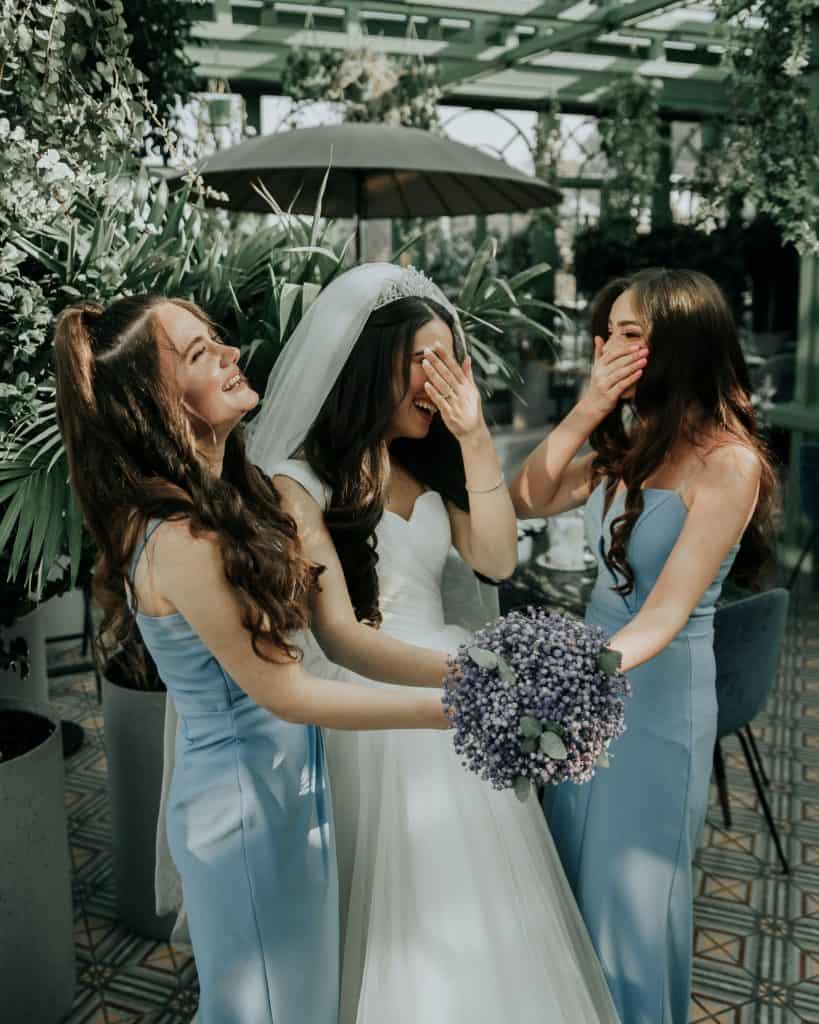
There are several titles for the special people that help the bride and groom on their wedding day. The person you select to bestow this honour upon will be by your side as a trusted advisor and assistant all the way up to and including the wedding day itself. This is why your pick of maid of honour deserves special recognition. However, what if there are so many options that picking just one seems impossible?
Wedding traditions are changing, which is great news in today's modern world. The focus is on you and what will make your event successful. Don't stress over the maid of honour situation; there are many viable alternatives. Relax, breathe deeply, and let's consult with some experts on wedding planning.

Looking for the ultimate Wedding Reception Venue in Melbourne? Look no further, Vines of the Yarra Valley is here.
More and more brides are opting to have two maids of honour because they just cannot decide between two very close female friends or a best friend and a sibling. It's customary for the groom to have two best men, therefore it's only right that the bride do the same. Here are the things to keep in mind if you decide to go with the traditional route of two maids of honour:
Table of Contents
Dividing Maid-Of-Honor Duties
Many various arrangements can be made for the maid of honor's duties. One maid of honour can sign the marriage licence while the other handles the vow cards, bouquet, and gloves. Both maids of honour can walk through the aisle with you.
Consider the unique set of abilities and attributes that each of your maids of honour have. Those with creative skills will be asked to assist in making party favours and setting the mood for the event. Plan two parties with your maids of honour: one for your friends on your hen's night, and another for your elder relatives and coworkers for your bridal shower.
It's a good idea to have two maids of honour, as the maid of honour is responsible for a wide range of tasks leading up to and during the big day. The tasks that each maid of honour is responsible for should be clearly delineated, however, to avoid any duplication or oversight that could lead to extra stress and frustration.
Two of the brides' best friends or sisters have been chosen co-maids of honour, which is a lovely development we've noticed among our women and their bridal parties. These fortunate newlyweds had the delightful predicament of having to choose between two wonderful, supporting ladies in their lives, and instead of making a final decision, they both agreed to forego the role of maid of honour.
Planning a bridal shower and, maybe even, a bachelorette party for the bride are just two examples of the many responsibilities that fall on the shoulders of the maid of honour. It's smart to appoint two maids of honour so that the time-consuming tasks can be split between them. The bride may relax knowing that her wedding duties are being handled by reliable and trustworthy friends who each provide half the time, half the effort, and half the cost.
If you're interested in having two maids of honour, here are several ways that you and your closest female friends can divide the duties of the position by having a close acquaintance who also resides in your area might be very convenient while looking for formal wear. The second maid of honour can do the bulk of the research on the latest styles, flower and cake designs, and etiquette questions and answers, all from the comfort of her own home; If you have a sister with an eye for style, she would make the excellent bridesmaid dress coordinator, and if you have a friend with a knack for graphic design, she could make all of your stationery for the big day; One of the maids of honour can offer to pay for the more costly aspects of the bachelorette party, such renting a limousine. The co-maid of honour, on the other hand, is responsible for the more expensive yet time-consuming activities, such as updating guest mailing addresses.
It is customary for the maid of honour to sign the marriage licence and to hold the bride's bouquet during the ceremony; if you have two maids of honour, it is appropriate to assign one of them the bouquet and the other the pen. Your unwed best friend or sister will be honoured with the title of maid of honour, and she and the other maid of honour can walk in the processional together to demonstrate their equal status in the bridal party.
Contrarily, matron of honour is traditionally reserved for a married female friend or sister of the bride. Your two maids of honour, or honour attendants, as you like, will be by your side throughout the entire process, offering advice, moral support, and well-wishes as you embark on this next chapter of your life.
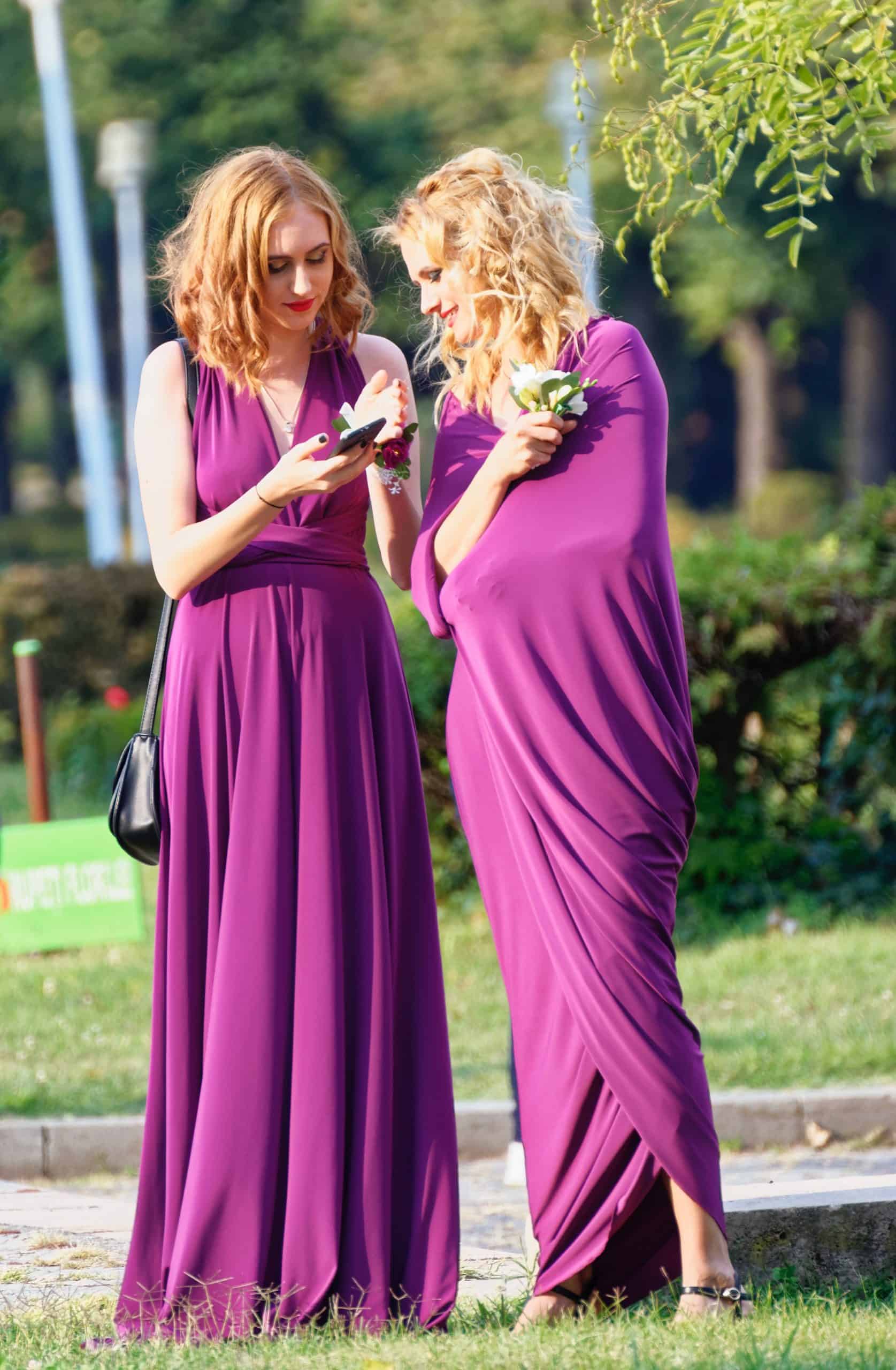
Consider Why You’ve Chosen Two
Choosing between two options out of pure voluntariness is qualitatively different from deciding between options due to external influences. Don't think brides and grooms should feel pressured into making a decision. Reconsider your goals in the face of pressure from loved ones or friends who are trying to guilt you into changing your mind. Now is the moment to establish norms for the kinds of connections you value and the ones you don't in the future.
What matters most is what works best for your wedding. The bride is advised to envision her wedding day and consider what will make her feel most beautiful on that special day. If you're the type of person who can't enjoy a party without their two best friends at their sides, then maybe you should consider getting two.
Both Girls Must Agree
Recognizing one's equals should come naturally. Appointing people who aren't already close friends or colleagues presents a challenge, and it's important to pay close attention to group dynamics as a result. Try taking them out for drinks or finding a common interest they can share. They will be able to work together more efficiently and effectively if they can build trust with one another, which will make their collaboration stronger.
It's important to squash any simmering feelings of envy, animosity, or petty rivalry between them. If one of your honour attendants is unable to adapt to the new circumstances, they may not be a good fit for the joint position.
Clarify Their Roles
If there is a lot of work to be done, people may divide and conquer using planning showers and other forms of creative assistance. Remember the connection between your maids of honour as well. Some teams may find it simpler to collaborate than others. Consideration must also be given to logistics, such as distance and the availability of each maid of honour. Also, make sure that everyone understand their respective responsibilities; you don't want any miscommunication or overlap in terms of effort.
Make them shine
Both honour attendants can be made to feel like the centre of attention in a variety of different ways. Give them a say in what they wear and allow them pick out their own bouquets to show off their unique style while sticking to the theme.
Favors made especially for the wedding guests are a nice gesture. the concept of selecting a unique present for each buddy and accompanying it with a heartfelt note. You may also honour them with a toast during the dinner party, or have the reception's DJ or band play some of their favourite tunes.
Who Is Standing Next to Me at the Wedding?
You should entrust your veil and train fluffing tasks to the maid of honour standing next to you. While you exchange rings, the other person holds your bouquet. The maid of honour who is in charge of the train should also be entrusted with the wedding ring, as she will have both hands free during the ceremony and the other maid of honour will be burdened with a bouquet or two.
How Should They Be Arranged in the Ceremony?
One can approach a professional in a variety of ways. The specific one you pick will rely on the other aspects of the ceremony. The two rules from which all other processional configurations are derived are:
- The maids of honour often enter the ceremony space just before the bride.
- The other maid of honour must enter after or to the right of the woman who will be standing next to you.
Assuming there are as many male as there are female adult attendants, each maid of honour should be accompanied to the exit by a male attendant. If there is only one best man, he will accompany the maid of honour who is standing closest to you. If there are more women in attendance, the best man will walk with both maids of honour.
Who Takes Care of Organizing the Bridal Shower?
It is up to them how they choose to split up the tasks involved in planning the bridal shower. It's up to you if you want to take a bridal shower or not. Stuck for Hens ideas? We’ve got you covered. Check out our extensive list of Hens Party Ideas for your bestie.
Both Should Plan Pre-wedding Events
A maid of honour will often organise both the bachelorette and bridal shower. Since there are two of you, each of you can take turns deciding who will be in charge of making plans.
You should push for a collaborative approach to event planning between them. However, if they are quite dissimilar, it may be wiser to have each person organise their own event.
What kind of tequila-drinking party girl do you consider yourself to be? She is the one you want to entrust with the organisation of your bachelor party. Your bridal party may opt to organise the festivities leading up to the wedding as a unit if they are close friends and have proven their ability to work effectively together. They may find it more convenient to divide and conquer if they are not as tight.
Possible extensive responsibilities for the maid of honour on the wedding day. If you have two reliable friends to assist you, your wedding will go off without a hitch and on time.
Check out our post on What is a good gift for a bridal shower?
Let Them Walk Together
The maid of honour traditionally makes her entrance down the aisle immediately before the bride. Allow a pair to descend the stairs together. This will show them how much they mean to you and that you see them as equals.
Have you decided to have only one best man? Not at all! It's perfectly acceptable for the best man to walk both of the brides down the aisle at the same time during the exit from the ceremony.
However, it's important to have someone close you as you take your vows. The maid of honour traditionally holds the bride's bouquet and stands next to the bride at the altar. One of your closest friends can serve as the second matron of honour if she is one. If they are both equally deserving of the maid of honour role, then you will need to determine who sits where.
Assigning everyone of them a separate task to perform throughout the ceremony is a wonderful approach to let them feel like equals no matter what their status may be.
One should take care of the groom's ring, while the other should hold the bouquet. A fantastic technique to recognise them both without drawing too much attention to their relative positions.

Is Having Two Maids of Honour Acceptable?
Why, yes! Since it is your celebration, you may have as many ladies of honour as you like. Of course, you'll want to go out of your way to celebrate your power couple. Perhaps you'd like them to stand out from the rest of your posse of bridesmaids by donning outfits that are just a tad out of the ordinary.
This may involve a modification to the hemline, which may take the form of a shorter or longer length while retaining the same colour scheme and general silhouette. You might also have them walk down the aisle together, making it clear that they are co-heads of the bridal party.
Instruct the best man to dance around the dance floor with both bridesmaids during the bridal-party dance during the reception. As a final touch, have your two primary maids deliver a toast to guests together at the reception. Tell your photographer to be ready for this amazing photo opportunity.
FAQs About Maid of Honour
If you can't decide between two or three different friends or family members, why not choose them all? Your maids of honor can share bridesmaid duties and split maid of honor responsibilities—or you can even delegate which tasks you'd like them to handle.
Most people call them your Best Woman, but she would be considered as part of the groomsmen. The equivalent exists in the opposite direction, called the Man of Honour.
You might not want one, and that's 100 percent fine. We know it seems like every bride has a troop of bridesmaids lead by a maid of honor—but there's no clause in some all-knowing wedding rule book stating you need a maid of honor. (Actually, you don't even need bridesmaids if you don't want them.)
Conclusion
Some brides are going with the tradition of having two maids of honour because they just cannot make a choice between them. The duties of the maid of honour extend far beyond just attending the wedding itself. The two maids of honour can divide and conquer; one can sign the marriage licence while the other takes care of the vow cards. If you can afford it, select two maids of honour to help with the wedding. The maid of honour can perform the bulk of the homework on the wedding's style, flowers, cake, and etiquette without leaving her house.
Content Summary
- There are several titles for the special people that help the bride and groom on their wedding day.
- This is why your pick of maid of honour deserves special recognition.
- Consider the unique set of abilities and attributes that each of your maids of honour have.
- Plan two parties with your maids of honour: one for your friends on your hen's night, and another for your elder relatives and coworkers for your bridal shower.
- It's a good idea to have two maids of honour, as the maid of honour is responsible for a wide range of tasks leading up to and during the big day.
- Two of the brides' best friends or sisters have been chosen co-maids of honour, which is a lovely development we've noticed among our women and their bridal parties.
- These fortunate newlyweds had the delightful predicament of having to choose between two wonderful, supporting ladies in their lives, and instead of making a final decision, they both agreed to forego the role of maid of honour.
- Planning a bridal shower and, maybe even, a bachelorette party for the bride are just two examples of the many responsibilities that fall on the shoulders of the maid of honour.
- It's smart to appoint two maids of honour so that the time-consuming tasks can be split between them.
- If you want two maids of honour, you and your closest female friends can share the chores. Having a close friend who lives in your neighbourhood can be helpful while shopping for formal clothes.
