
The price charged by wedding photographers can range hugely and many charges into the thousands for a full day of shooting, however, they are a necessary part of any wedding day. Wedding days are the most important day in many of our lives and the risk of not having the photos you dreamed of runs high unless you have professionals taking care of it.
Not only do wedding photographers take staged photographs of the wedding party and guests, but many also offer a full day of shooting which involves everything from photographs of the bridal makeup and hair being done right until the last person leaves the wedding reception. Furthermore, just like wedding DJ photographers’ work is not done when the day is over as they then have the responsibility of choosing the best quality photos and making any edits to those that need it.
With such pressure on professionals to capture every perfect photograph, it is somewhat understandable that wedding photographers are so expensive when you consider the sheer amount of equipment required.
Not only do they need one camera, but also lenses, tripods, memory cards, batteries, a different camera for this, a different camera for that and camera equipment is not often easily affordable with many wedding photographers’ kit reaching a cost of well into the thousands of pounds. With all this expensive kit, you also need public liability insurance that most venues require before allowing you to work on their premises, again another large expense.
That is just the camera, what about editing your photos? A powerful laptop or PC is needed, software to edit the photos, back up hard drives, so nothing is lost, USB pens and online storage to supply your photos, all these costs add up.
Weddings can be so expensive, with the venue, the food, the clothes, the decorations, the DJ or band; the list goes on and on and on. Add the cost of the photographer on top of the list, and it can feel overwhelming, and it will make you wonder why wedding photography costs so much. We’re here to break it down from a photographer’s perspective so you can understand all the work that goes on behind the scenes.
Looking for the perfect picturesque Wedding Photo Locations in Melbourne? Look no further, Vines of the Yarra Valley have you covered.
Table of Contents
Time
The amount of time a wedding photographer spends on wedding factors into why wedding photography costs so much. The time spent can be broken down into four categories: client meetings, pre-wedding day preparation, the wedding day, and the editing.
Client Meetings
The client meeting is more than just the initial interview between the couple and the photographer to see if they’re a fit for one another. There will be subsequent meetings to update the photographer on the planning process and to discuss the wedding day timeline. A good wedding photographer will periodically check in with their couple to see if everything is going well and if they have any questions. Sometimes these meetings can be done via video chat, but sometimes they require the photographer to travel away from their home to meet with the couple. This process takes a few hours.
Pre-Wedding Day Preparation
The pre-wedding day preparation also factors into why wedding photography costs so much. If the wedding package includes an engagement shoot, a photographer has to account for travelling time, photographing the couple, and editing the photos. There is often location scouting involved to find the best spot for the bridal party photos on the day of the wedding, especially if the venue is a new one for the photographer. There may be a dress rehearsal for the photographer to attend. Your photographer might even be looking online for inspiration via new angles to try shooting from or for a new take on a photo they’ve shot dozens of times. They need to prepare and pack their gear, and they need to run through the shots mentally they plan on taking. This will take your photographer another 7-10 hours, depending on the length of the engagement shoot.
Wedding Day
The wedding day is likely 7-10 hours long, plus the drive time for the photographer too and from home. Some weddings may require the photographer to travel long distances. It is not uncommon for photographers to travel 2-3 hours one way from their hometown to cover a wedding. Sometimes photographers will fly across the country or even overseas for a wedding, in which case the photographer uses about two days of their time to get to and photograph the wedding. Travel time has to be incorporated into a photographer’s cost of doing business. If there is a second photographer involved, that person has to be paid as well. You’re suddenly getting the equivalent of 16 hours of work when your 8-hour wedding package includes two photographers.
What are the factors that can influence wedding photography price quotes?
Keep in mind that even if a photographer lists starting prices on their website, there are certain factors that might influence the estimated cost to photograph your wedding, such as
- The popularity of your wedding date
- Travel and/or accommodation fees (ask the photographer about their specific policy)
- Package add-ons, such as albums, prints, second shooters, etc.
- The number of hours they’ll be asked to photograph
- Special equipment they may need to photograph your venue
- Taxes and fees (ask the photographer if these are already included in their price quote)
Wedding Photography is Expensive Because it’s a Luxury
In the context of this article, I’m defining luxury as something that you want or would like to have but don’t actually need. The Craigslist poster wrote, “They are ripping people off for all they have! Why when you want to get married it costs you AT LEAST 15 grand after all is said-and-done? Its such CRAP!! I love all you $ 3,000.00 photographers out there, but I think your prices are WACK.”
Immediately, I would like to point out that there’s a distinction between getting married and holding a wedding. Getting married is something you may need; holding a wedding is something you want. The poster is wrong when she states that getting married is expensive: relative to the price of a wedding, it’s quite affordable.
For instance, if you live in Toronto and wish to marry, your total expenses would come to under $400, including the license and marriage officiant. I’m aware that the writer is from Puget Sound, but I doubt getting married in Washington is much more expensive than in Ontario. In any case, despite her choice of words, the writer was referring to holding a wedding.
Weddings are expensive because having a large catered party is a luxury. When you remove the ceremony from the rest of the day’s archetypical activities, you’re left with the greater portion of that hypothetical $15,000 bill. Your costs shouldn’t rise by much even if religious obligations require the ceremony be held at your respective house of worship.
The major expenses are everything that isn’t part of the official ceremony: the venue(s), liquor and multi-course meals for guests, a multi-tiered cake, flowers, decorations, entertainment, your wardrobe, makeup and hair, accommodations, and, given the nature of this article, your desire to have a wedding photographer document the entire affair and do so with exceptional artistry.
When wedding photographers choose to acknowledge the question with detailed cost breakdowns, they put themselves and the profession as a whole at a disadvantage. Defending your rates in such a manner is an implicit acknowledgement that they are indeed unreasonably high and, worse, that your abilities don’t speak for themselves.
Wedding photography is a luxury service, and there is absolutely no imperative for you to provide customers with an audit. Such an analysis may also put you at a disadvantage with customers who question your margins (since those who do only care about the bottom line anyway), and your perfectly legitimate reasons can be misinterpreted as excuses.
I would like to make a proposal to my fellow wedding photographers: Stop justifying your fees using cost breakdowns. It cheapens your work. Treat wedding photography as the desired luxury service that it is, not the basic necessity that budget hunting couples wish it to be.
Good wedding photography is a luxury service for a luxury occasion that commands luxury prices. As the saying goes, “You get what you pay for.”
Check out our ultimate list of Melbourne Wedding Photo Locations to help capture those priceless memories.
Talent
I would argue that this is the number one reason wedding photography costs so much. You hire a wedding photographer based on the look of and the quality of work they produce. It takes so much time for a photographer to develop their shooting technique, to find their perfect editing style, to find the best way to interact with each to bring out the best reactions and expressions for photos. This takes both natural talent and high dedication to practice until they reach the ever-elusive perfection. A good photographer is always researching new poses to try and better methods to get the results they’re looking for. They will keep an eye on which gear is the best to give you the ultimate level of quality
You are paying for talent and experience. This is a day that you can’t recreate if something goes wrong. You want to pay for the assurance that the person photographing your big day knows how to handle any sort of lighting, any setbacks or time delays, and knows how to handle prominent personalities and reluctant subjects smoothly.
Editing
Finally, editing is probably the most time-consuming aspect of a wedding. Editing is one of the reasons why wedding photography costs so much. Your photographer could take dozens of photos seconds apart to avoid missing a particular moment, or they might be much more selective with each shot they take. So a wedding photographer can choose anywhere between 50-300 photos per hour. For an 8 hour wedding that could be approximately 2400 photos. Now your photographer needs to cull these photos: separate the best photos from the average or sub-par ones. The time varies depending on the photographer, but it would probably take 3-4 hours to cull the images for an 8-hour wedding.
The actual editing process takes much longer and is an even more significant factor in why wedding photography cost so much. The photographer can sometimes apply a specific editor preset to multiple photos at once. Still, then they will go through each picture individually to manually adjust these presets to give the photo the perfect final look. Expect this process to take another 8-24 hours. Plus your photographer will probably leave your photos for some days before coming back with fresh eyes to correct any overlooked imperfections before sending you your photos.
If we’re counting hours, at the very minimum, your photographer has spent 24 hours of their time on the various aspects of one wedding. This doesn’t even include the time needed to create a wedding album. Now you might be wondering why your photographer takes so many weeks to send you the photos after your wedding. Remember your photographer has other weddings to photograph, they may also have different types of photoshoots to attend, more client meetings, other client photos to edit, and their own family life.
Do you have your photo album for your wedding pictures? Check out our post on How much do wedding photo albums cost?
Photography is more than an expensive camera.
As you can see, there is a large amount of money spent on having the right equipment for the job, and also a large amount of time that goes into it all, but there is more to the job and capturing your perfect wedding day than just the camera and all the gadgets, these are just tools.
There are skills and an art that has been developed, learnt and honed by the photographer over many years. You can give all the same equipment to someone who has little professional experience, and they may take one or two nice shots. Still, a professional photographer with years of experience will take a whole album worth of stunning shots that tell a story. This is what you are paying for. Someone with years of experience, someone you can trust.
Wedding photography isn’t just a purchase, your wedding dress is a purchase, you shall wear it once, and that is all, your wedding flowers are a purchase, after a few days they shall wilt and that will be that; however your wedding photography is an investment.
Your wedding photos are a story of your perfect day, and they will capture the emotion of the day, your beautiful fresh flowers, your stunning white dress, your wedding album will hold all those memories and moments forever which you can share with friends, family and grandchildren.
Gear
Phew – that last section was super detailed, I promise this one will be much more concise. Your wedding photographer’s gear is probably the second biggest reason why wedding photography costs so much.
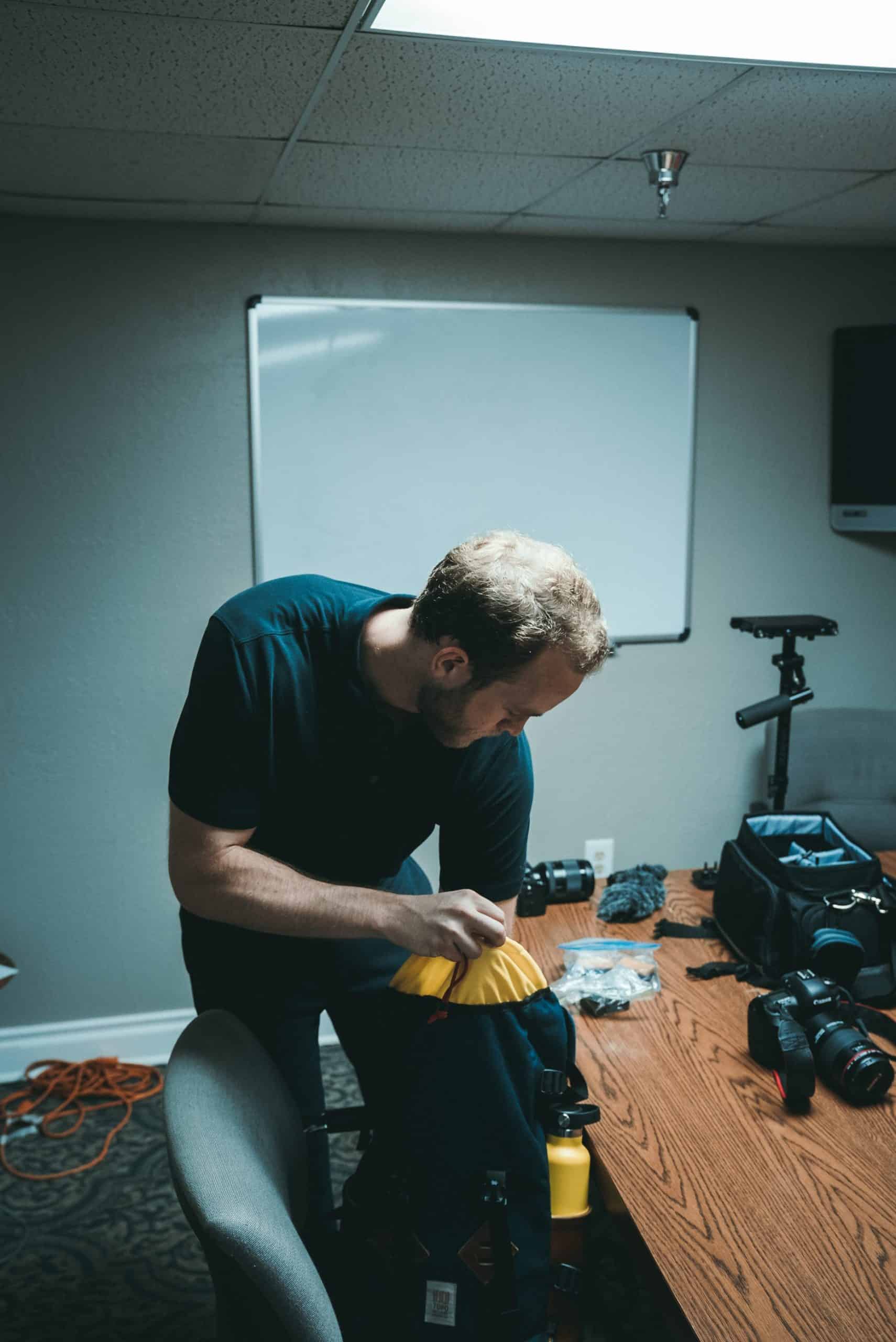
A wedding photographer has at least two camera bodies to work with. This is to reduce the amount of time they have to spend switching between lenses – especially at crucial moments like the first kiss. This is also, so they have a backup camera if the worst-case scenario happens and the camera stops working. They will have an absolute minimum of 3 lenses in their camera bag for various looks and aesthetics. One lens to take photos from far away, one lens for super close up detail shots, and one lens for more general photos. The more experienced your photographer is, the more lenses they will have for specific situations throughout your wedding day.
Your wedding photographer will also have flashes, spare batteries and memory cards, and lens filters to protect their lenses. The cost of all these items together run into tens of thousands of dollars.
Photography is Expensive
There are quite a few smaller expenses I have failed to mention to limit the length of this article. Hopefully, you have a better appreciation of why wedding photography costs so much. Often wedding photographers are swallowing some of these costs when starting their business to draw in more clients. They deserve a chance to earn those investments into their business back. They also deserve a chance to earn enough to support their family AND to save for retirement.
Finally, remember that most weddings are going to fall on the weekend. This means wedding photographers are more limited than other photographers in the number of clients they accept. Rest assured, photographers that charge a lot of money are incredibly talented and wholly dedicated to their craft.
